Quality controls and validation

Respondent quality is checked before data is shared.

DATA-ORCHID applies multiple quality controls including screening, identity checks, validation logic, attention checks and consent-led data handling. VeritasIdentity is included as part of the identity and respondent validation framework.

Professional presenting survey quality controls and validation checkpoints.

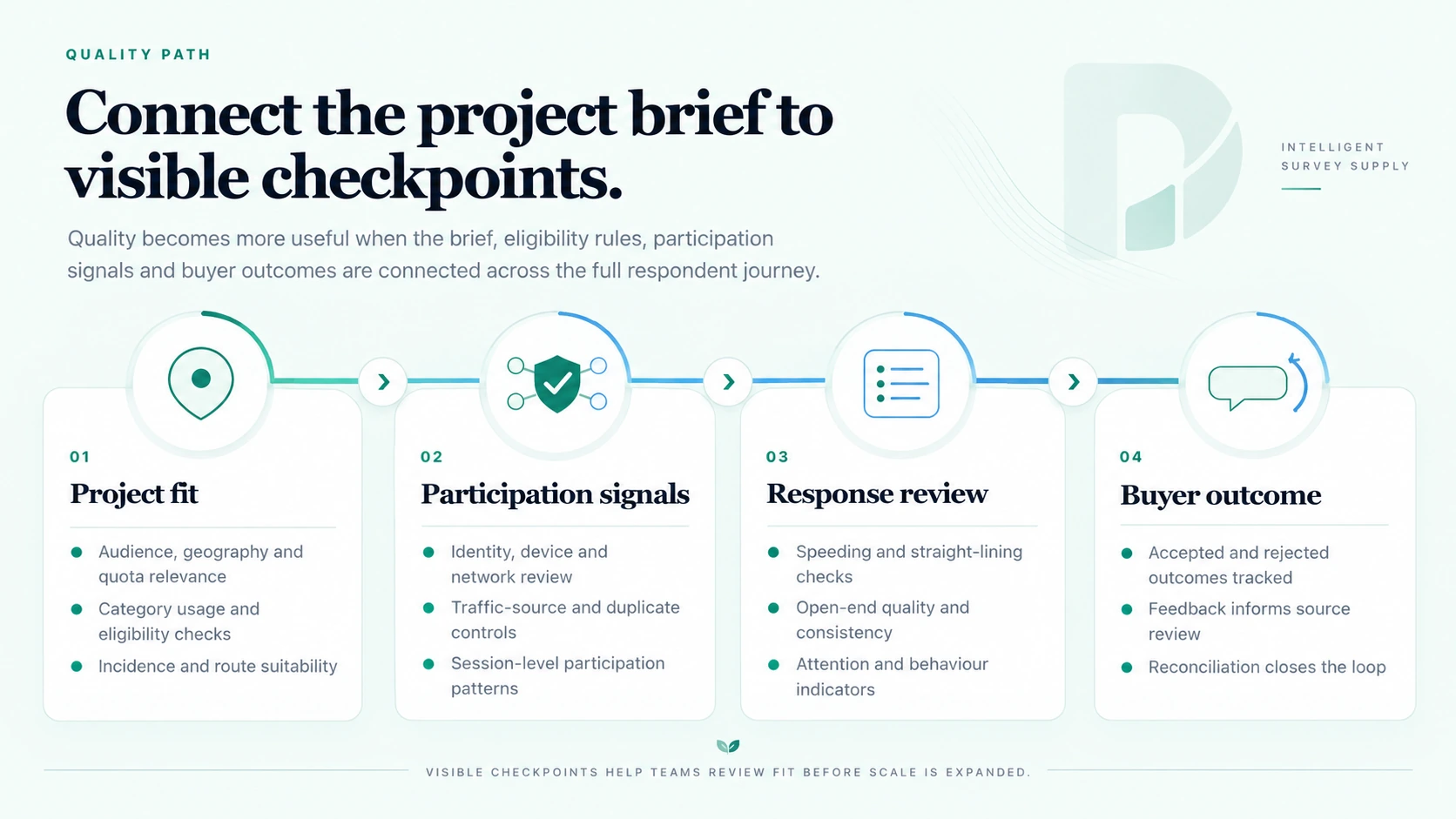
Build quality checkpoints around the project brief.

Quality expectations vary by audience, market, survey design and buyer acceptance rules. The right controls are agreed during project review.

Screening

Confirm topic relevance

Initial checks can cover age, location, category experience and relevant usage.

Identity

Validate participation signals

Email-based verification and respondent validation support cleaner participation.

Attention

Review response quality

Attention checks and response review can be included where the project requires them.

Feedback

Reconcile source performance

Buyer feedback supports source approval, caps and reconciliation decisions.

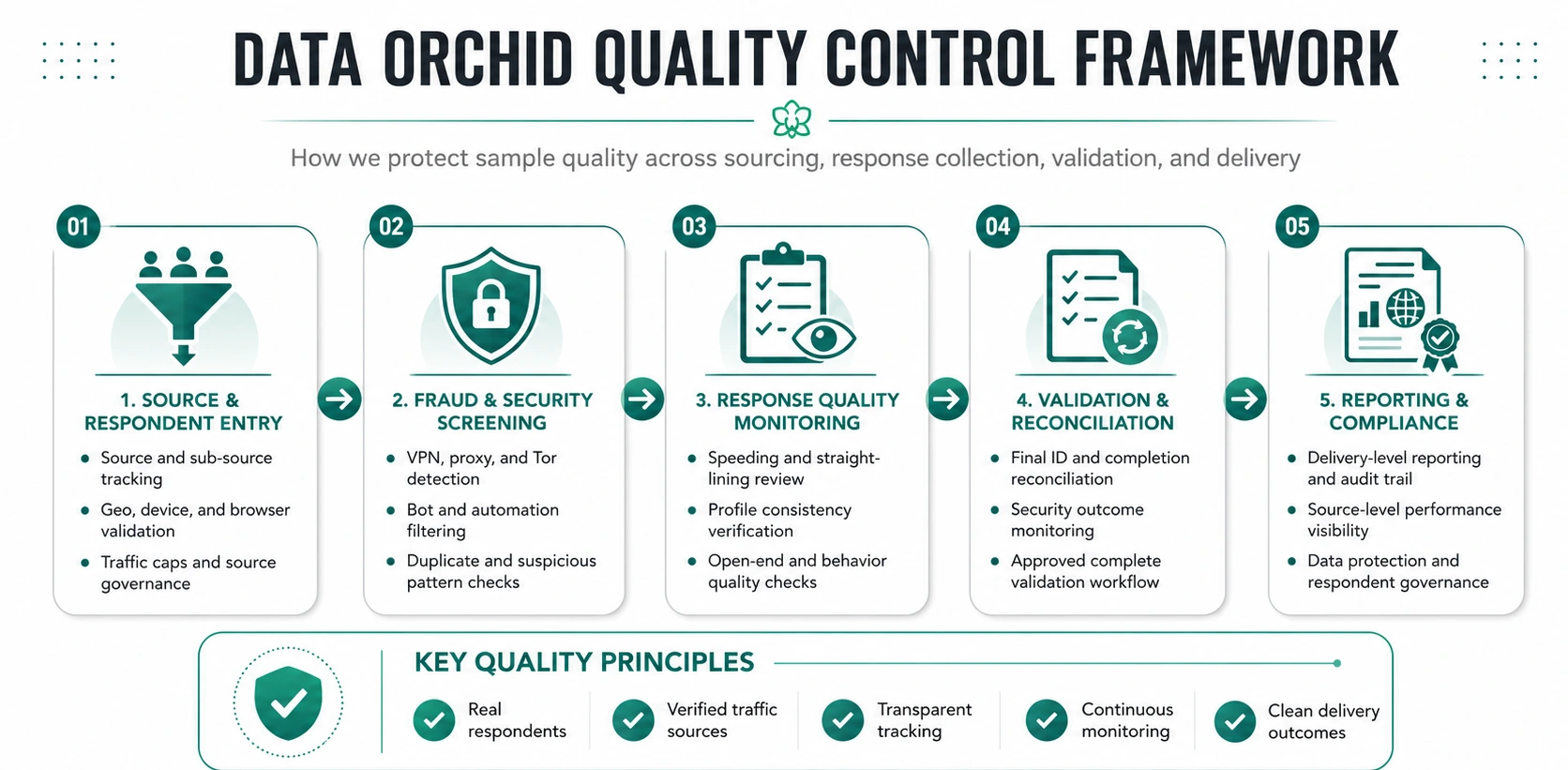
DATA ORCHID quality control framework covering respondent sourcing, fraud and security screening, response-quality monitoring, validation, reconciliation, reporting and compliance.
Operational quality-control framework. Validation and acceptance controls are selected according to project and buyer requirements.

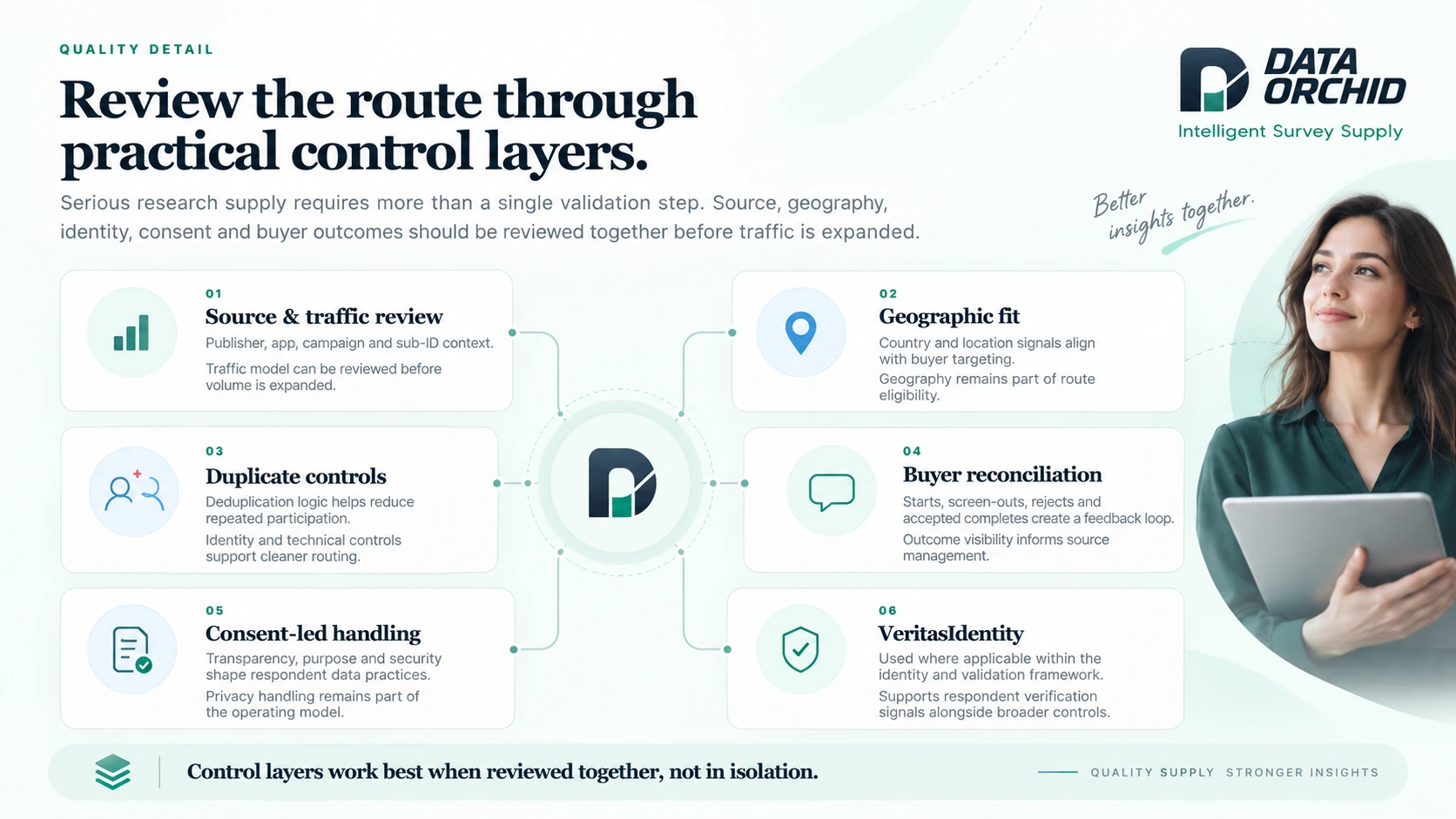
Practical controls for a cleaner operational handoff.

These are capability areas for project discussion, not a claim that every control is applied identically to every study.

01

Source and traffic review

Source, campaign and sub-ID context can be reviewed before volume is expanded.

02

Geographic fit

Market and location signals help align respondents with buyer targeting.

03

Duplicate controls

Deduplication and validation logic support more reliable respondent routing.

04

Buyer reconciliation

Starts, screen-outs, rejects and accepted completes create a feedback loop.

05

Consent-led handling

Respondent data practices are planned around transparency, purpose and security.

06

VeritasIdentity framework

Used as part of the respondent identity and validation framework where applicable.
A visible path from source context to final reconciliation.

The quality path combines operational judgement with clear checkpoints selected for the project brief.

Quality control pathProject framework
  1. 01Source reviewSource IDs, campaigns and partner pathways.Review
  2. 02Identity and device signalsCountry, device, network and duplicate checks.Validate
  3. 03Response hygieneTiming, attention and open-end review.Inspect
  4. 04Final-ID reconciliationAccepted, rejected and reason-coded outcomes.Report

Final controls, acceptance rules and reporting requirements are selected for the brief, market and buyer agreement.

Operational review stays close to the work.

Quality planning is most effective when teams can review requirements, monitor the route and keep the buyer’s acceptance criteria visible throughout the project.

Review requirements before launch.
Maintain source and traffic context during delivery.
Use buyer feedback to inform ongoing decisions.

This photograph represents a research discussion and contains no live respondent or client data.

Professionals reviewing survey quality requirements.

Make the acceptance rules explicit.

For a useful quality review, share the survey link, target audience, markets, expected incidence, LOI, validation requirements and buyer-side rejection criteria.

Define what counts as an accepted complete.
Agree how source identifiers and sub-IDs will be recorded.
Confirm which validation signals are required before launch.
Set a review cadence for source-level feedback.

Need quality controls mapped to a buyer brief?

Start with the audience, study design and acceptance requirements.

Request a quality review